
Table of Contents
- Why Regular Commercial Exterior Cleaning Matters in 2026
- 1. Protect Your Building’s Structural Integrity
- 2. Boost Curb Appeal and Customer Perception
- 3. Reduce Health and Safety Risks for Staff and Visitors
- 4. Understand the Cost of Commercial Exterior Cleaning vs. Repairs
- 5. Follow a Commercial Pressure Washing Frequency Schedule
- 6. Meet WHS Compliance for Building Maintenance
- 7. Remove Mould, Algae, and Environmental Contaminants
- Frequently Asked Questions
Last Updated: September 7, 2026
Why Regular Commercial Exterior Cleaning Matters in 2026
Neglecting your building’s facade is a slow leak on your operating budget. Every layer of grime, biofilm, and atmospheric pollution that settles on your property actively degrades the materials beneath it, forcing premature repairs that far exceed the cost of routine upkeep. This guide from AquaBlast Elite breaks down the benefits of regular commercial exterior cleaning and why it belongs in your annual maintenance plan, not just your pre-lease checklist.
Commercial exterior cleaning is the systematic removal of dirt, pollutants, mould, and biological growth from a building’s outer surfaces to protect the structure and preserve its appearance. The business case is straightforward: proactive maintenance protects your asset value, keeps occupants safe, and reinforces the professional image your customers see first. Below, we’ll outline the seven core benefits that make this service a non-negotiable expense for property managers and business owners.
1. Protect Your Building’s Structural Integrity
The most compelling reason to schedule regular cleaning is what happens when you don’t. Airborne pollutants, bird droppings, and industrial fallout are not just unsightly; they are chemically active. When combined with moisture, they accelerate surface deterioration on masonry, metal cladding, and painted finishes.
This is where the distinction between cleaning methods matters. A common mistake is assuming all pressure washing is equal. Soft washing uses low pressure with specialised solutions to remove biological growth without etching soft materials like timber or older brick. High-pressure washing suits concrete and hardstand areas. Using the wrong technique can force water into cracks, accelerating the very damage you are trying to prevent. A professional assessment of your specific building materials is the first step toward genuine asset protection.
2. Boost Curb Appeal and Customer Perception
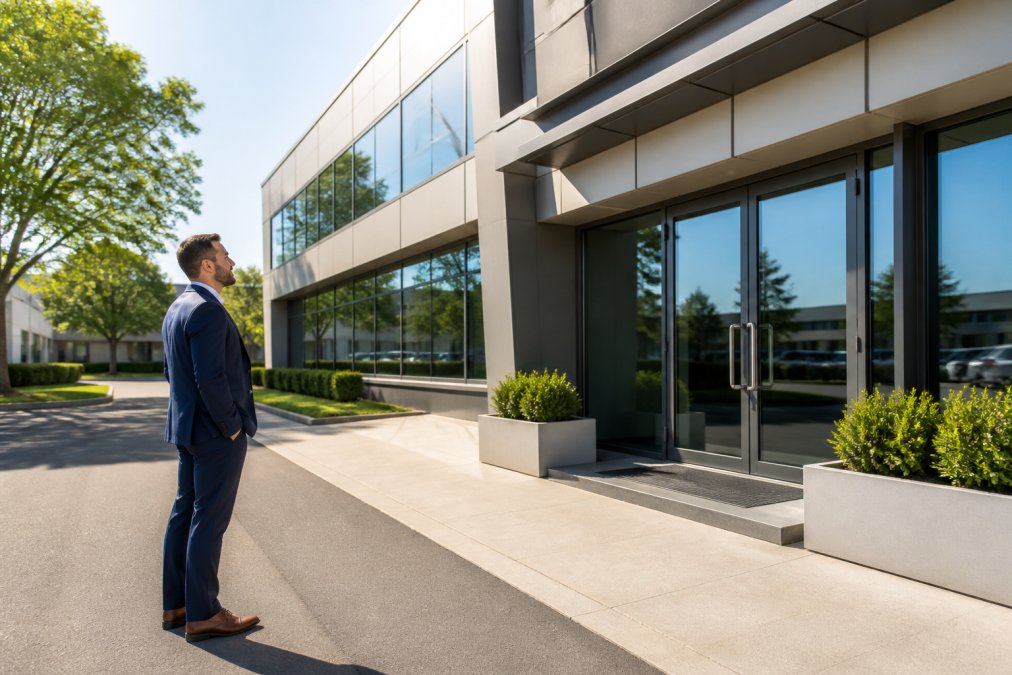
Your facade is a silent salesperson. A stained entryway or algae-streaked wall signals neglect before a single word is exchanged, directly influencing customer perception and their willingness to enter.
First impressions are formed in seconds. A clean, well-maintained exterior tells clients and tenants that you manage every detail with the same care you would bring to their business.
For retail and hospitality, this translates into foot traffic. For office blocks, it supports higher tenant retention and rental values. Property valuation is also affected; a building that looks neglected appraises lower than an identical one that is pristine. Routine cleaning elevates the cleanliness and appearance of your space, supporting the professional standing of everyone operating within it.
3. Reduce Health and Safety Risks for Staff and Visitors
Beyond aesthetics, accumulated grime presents real occupational health and safety hazards. Slippery algae growth on walkways and entry mats is a leading cause of slips and falls. Mould and mildew can aggravate respiratory conditions for employees and customers alike (the CDC).
Regular removal of these environmental contaminants reduces hazardous buildup at your entrance. This is not merely good practice; it is a duty of care. A documented cleaning schedule provides evidence that you are actively managing site risks, which is critical if an incident ever occurs. Proactive removal of allergens and biological growth keeps high-traffic areas safe for everyone who crosses your threshold.
4. Understand the Cost of Commercial Exterior Cleaning vs. Repairs
The financial logic of preventative maintenance is simple: cleaning is a fraction of the cost of replacement. Replacing degraded timber, repointing brickwork, or repainting a full facade involves material costs, labour, and downtime that dwarf a scheduled clean.
But to move this from a ‘good idea’ to a board-approved budget line, you need to frame it as an investment with a measurable return. The unique angle here is a simple ROI calculation framework that property managers can use to justify the expense.
A Simple ROI Framework for Exterior Maintenance
Most practitioners find that a basic cost-of-inaction model is the most persuasive tool. The formula is straightforward:
Cost of Inaction = (Estimated Repair Cost × Probability of Damage) + (Lost Revenue from Downtime or Vacancy)
Cost of Action = Annual Cleaning Contract Cost
ROI = (Cost of Inaction – Cost of Action) ÷ Cost of Action
Let’s ground this in a realistic scenario. Consider a single-storey retail facade with 200 square metres of painted masonry. A professional soft wash and spot treatment for that area might cost between $800 and $1,500 per visit, depending on access and condition. If you schedule that twice a year, your annual ‘Cost of Action’ is roughly $2,000 to $3,000.
Now model the ‘Cost of Inaction.’ If biological growth is left to colonise, the paint system will fail prematurely. A full repaint of that same 200-square-metre facade, including preparation, priming, and two topcoats, will typically run between $15,000 and $25,000 in the current market, depending on scaffolding requirements and paint specification. If you estimate a 20% probability that deferred cleaning forces a repaint within five years, the expected repair cost is $3,000 to $5,000. Add the potential for a single week of lost trade during scaffolding erection, which for a busy retailer could easily exceed $2,000 in lost margin, and your ‘Cost of Inaction’ quickly surpasses your ‘Cost of Action.’
The Hidden Cost of Downtime
A second factor competitors rarely mention is scheduling flexibility. A routine clean can often be completed outside trading hours, early morning, late evening, or on a Sunday. A restoration project, by contrast, requires extended closures, permits for scaffolding on the footpath, and coordination with multiple trades. The disruption cost alone often justifies the preventative spend.
How to Get a Defensible Quote
To build your business case, ask your cleaning provider for a scope of works that itemises:
- Square metres of surface area to be treated
- Method (soft wash vs. pressure wash) and why it suits your substrate
- Access requirements (elevated work platform, water supply, waste containment)
- Frequency recommendation with a written rationale
A reputable provider will document the condition of your surfaces before work begins, so you have a baseline for measuring deterioration year on year. This documentation also strengthens your position if you need to claim against a building warranty or insurance policy later.
Treat exterior cleaning as a capital preservation activity. If the ROI calculation shows the annual contract is less than 10% of the replacement value of the treated surfaces, it is almost always a sound investment.
Pricing for professional services varies based on square footage, surface type, and access difficulty; reputable providers will scope the job and quote accordingly. The key is to stop asking ‘What does cleaning cost?’ and start asking ‘What does not cleaning cost?’
5. Follow a Commercial Pressure Washing Frequency Schedule
There is no universal answer to how often you should clean, but a risk-based schedule is essential. The commercial pressure washing frequency depends on your location, surrounding environment, and building materials.
Where most guides stop at a simple table, the practical gap is a seasonal maintenance calendar that accounts for the distinct climatic challenges across different regions. A schedule that works for a building in a temperate zone will fail for one in a tropical or alpine environment.
A Seasonal Maintenance Calendar
Spring (September – November)
This is the primary cleaning window for most commercial properties. Winter rains and cooler temperatures have encouraged mould and algae colonisation on shaded aspects. A soft wash in early spring removes the biofilm before it enters its most active growth phase. For properties in southern regions, this is also the time to flush away any residual de-icing salts from concrete hardstands and entry ramps, salt accelerates spalling and surface degradation if left to concentrate.
Summer (December – February)
High UV exposure can oxidise and fade signage and painted surfaces. For coastal properties, this is the peak period for salt spray accumulation on glass and metal cladding. A mid-summer clean for hospitality venues, especially those with outdoor dining areas, is critical for both presentation and slip resistance on tiled or paved surfaces. For inland properties with low rainfall, summer is the time to focus on dust and pollen removal from entryways and ventilation louvers.
Autumn (March – May)
As deciduous trees drop leaves and organic matter, gutters and downpipes are at highest risk of blockage. This is the optimal time to clear organic debris from roof lines and ensure drainage paths are unobstructed before winter rains. For properties in bushfire-prone zones, autumn is also the time to remove leaf litter and fine fuel accumulation from building perimeters, this is both a maintenance issue and a regulatory consideration under local council fire management plans.
Winter (June – August)
In colder regions, biological growth slows, but moisture levels rise. This is the season to monitor for early signs of mould on southern and eastern aspects that receive little direct sunlight. For properties in alpine or frost-prone areas, avoid pressure washing when temperatures are near freezing, water can infiltrate micro-cracks and expand, causing spalling. Winter is better suited to internal inspections and planning the spring clean scope.
Surface-Specific Frequency Drivers
Beyond the calendar, your substrate dictates the interval:
- Painted masonry and render: These surfaces are porous and hold moisture against the paint film. Clean annually to prevent mould from breaching the coating. If you see green streaks, the biofilm is already active.
- Glass curtain walls and storefronts: Salt spray and atmospheric pollution etch glass over time. A quarterly clean for street-level glass is reasonable; high-rise glass may only need bi-annual attention depending on exposure.
- Powder-coated aluminium and steel: These are less porous but still accumulate grime that can hold corrosive agents against the surface. An annual clean with a mild detergent is usually sufficient; more frequent if the property is within 2 kilometres of the coast.
- Natural stone and terracotta: These are the most delicate. They require soft washing only, and frequency should be driven by visible biological growth rather than a fixed calendar. Over-cleaning with high pressure can erode the protective patina.
The Risk-Based Assessment Table
| Surface / Area | Recommended Frequency | Primary Concern |
|---|---|---|
| Entryways & high-traffic paving | Quarterly | Slip hazards, staining |
| Building facade (urban) | 1-2 times per year | Pollution, biofilm |
| Building facade (coastal) | 2-4 times per year | Salt spray, mould |
| Awnings & signage | Quarterly | Brand image |
| Car parks & loading docks | Quarterly to semi-annual | Oil stains, grime |
A fixed calendar is a starting point, not a substitute for inspection. Walk your property after major weather events, a single storm can deposit enough silt and organic matter to create a slip hazard or block a drainage channel within days.
Properties near the coast or industrial zones face higher salt and pollutant loads and need more frequent attention. A maintenance schedule aligned with seasonal changes, such as a clean before winter rains and after spring growth, prevents buildup from becoming permanent. The most defensible approach is to pair a seasonal baseline with a condition-based trigger: if you can see biological growth from street level, the cleaning interval is too long.
6. Meet WHS Compliance for Building Maintenance
In Australia, property owners and managers have a legal obligation under Work Health and Safety (WHS) legislation to maintain a safe environment. This extends beyond internal fire safety to include external slip hazards and structural risks.
Failing to manage biological growth on pathways or degraded surfaces can be viewed as a breach of your duty of care under WHS laws, exposing you to liability if an employee or visitor is injured.
Documented exterior maintenance demonstrates proactive risk management. When insurers assess a claim, evidence of regular upkeep strengthens your position. Guidance from Safe Work Australia on managing WHS risks confirms that identifying and controlling hazards, including those from environmental contaminants, is a core employer responsibility. Partnering with a professional service that understands these compliance drivers helps you meet your obligations while protecting your staff and visitors.
7. Remove Mould, Algae, and Environmental Contaminants
The final benefit ties the others together: the actual removal of harmful biological matter. Mould, algae, and mildew are not just cosmetic issues. They form a biofilm that holds moisture against your building facade, accelerating decay and staining.
Professional cleaning targets these contaminants at the source. Unlike DIY efforts that may only rinse the surface, commercial-grade equipment and solutions penetrate to remove the root of the discolouration. This is particularly vital for graffiti removal, where paint can seep into porous concrete if not treated promptly. Routine removal of pollutants and biological growth preserves the surface longevity of your commercial assets, keeping them operational and presentable for years longer than an untreated building.
The benefits of regular commercial exterior cleaning extend from your balance sheet to your brand reputation and your legal obligations. It protects the structural integrity of your building, safeguards the health of its users, and ensures you present a professional face to the market. Deferring this maintenance does not save money; it simply transfers the cost to a larger, unavoidable repair later.
At AquaBlast Elite, we deliver customised exterior cleaning solutions across Sydney and surrounds, using advanced equipment to restore concrete, timber, and building facades. Our skilled professionals handle everything from routine maintenance to stubborn graffiti removal, ensuring your property remains a valuable, safe, and welcoming asset. Safe Work Australia’s guidance on workplace health and safety duties supports the proactive approach we recommend. Get in touch with AquaBlast Elite to schedule an assessment and book a call to discuss how we can protect your investment.
Frequently Asked Questions
How often should commercial properties undergo exterior cleaning?
The commercial pressure washing frequency depends on your location, building type, and surrounding environment. For most Australian businesses, an annual clean is the minimum. Properties in high-traffic areas, near the coast, or with shaded facades prone to algae growth may need a professional clean every six months. Facilities with food preparation areas or high visibility to customers often benefit from quarterly attention to entry points. A professional assessment can establish the right maintenance schedule for your specific site.
Does regular exterior cleaning help comply with WHS regulations?
Yes. Regular exterior cleaning directly supports WHS compliance for building maintenance. Slippery surfaces caused by algae, mould, or oil buildup create hazards for employees, customers, and visitors. Under Australian work health and safety laws, property owners and managers have a duty to maintain a safe environment. Proactive cleaning removes these risks and demonstrates your commitment to safety, which is crucial for insurance purposes and in the event of an incident.
What are the long-term cost savings of professional exterior maintenance?
The cost of commercial exterior cleaning is far lower than the price of repairing deteriorated building materials. Pollutants, mould, and biofilm accelerate surface deterioration. Regular cleaning prevents this damage, extending the life of your facade, concrete, and roofing. This preventative maintenance avoids costly reactive repairs and preserves your property’s valuation. Consistent care also means you will not need heavy restoration work later, delivering significant long-term cost savings.
How does exterior cleanliness impact customer perception of a business?
A well-maintained exterior signals professionalism and attention to detail. It creates a positive first impression, encouraging foot traffic and improving the visitor experience. A dirty facade, stained walkway, or visible graffiti suggests neglect and can directly affect customer perception and conversions. Regular commercial exterior cleaning protects your brand image and helps ensure your property presents your business in the best possible light.