
Table of Contents
- What Commercial Exterior Maintenance Plans Actually Cover
- Commercial Pressure Washing Frequency: How Often Is Enough?
- Strata Exterior Cleaning Services: Compliance and Common Area Care
- Exterior Building Maintenance Checklist for Facility Managers
- Recurring vs. One-Off Cleaning: The Cost-Benefit Case
- Environmental Compliance and Water Runoff Regulations
- How to Set Up a Commercial Exterior Maintenance Plan
- Frequently Asked Questions
Last Updated: August 30, 2026
What Commercial Exterior Maintenance Plans Actually Cover
Commercial exterior maintenance is a structured, recurring programme that keeps a building’s outer surfaces clean, safe, and presentable through scheduled professional cleaning. We design maintenance plans that match the actual demands of each site, not a generic template.
A well-structured plan typically addresses building facades, entry canopies, signage surrounds, car parks, driveways, bin enclosures, loading docks, stairwells, and common area pathways. Surface build-up from mould, algae, atmospheric pollution, and grime accumulates faster on commercial properties due to foot traffic volume and exposure. Left untreated, this accelerates surface degradation and creates slip hazards that carry real liability.
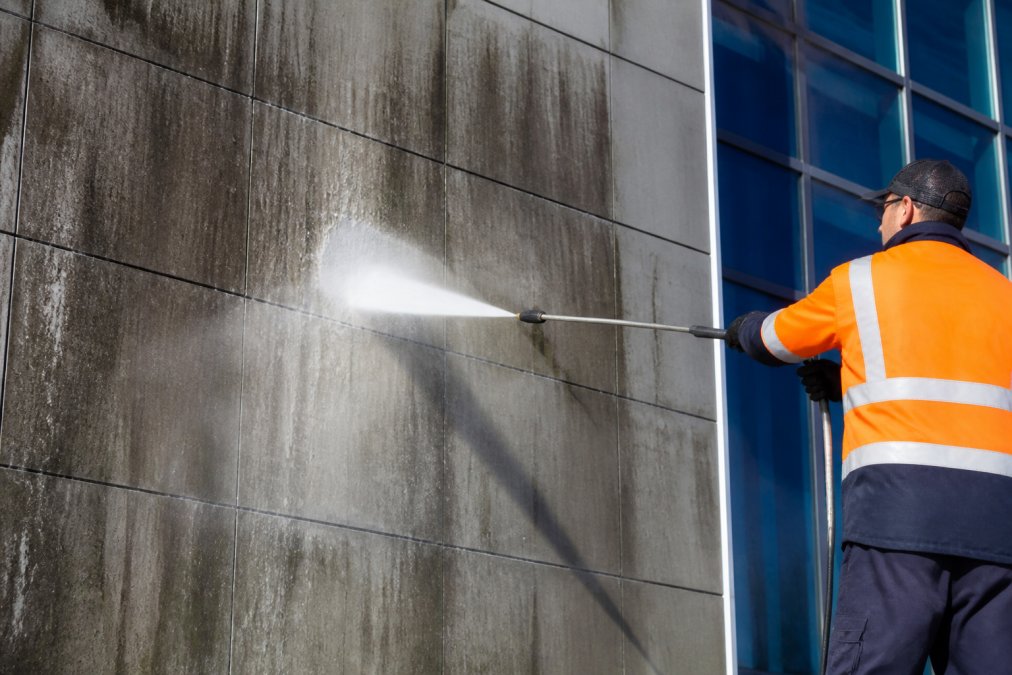
A maintenance plan defines cleaning frequency, surface scope, methods used, and reporting obligations. This shifts the relationship from transactional to preventative, where the real asset protection value lies.
Pressure Washing and Soft Washing: Choosing the Right Method
The biggest mistake facility managers make is assuming all exterior cleaning is the same. Pressure washing and soft washing are distinct techniques, and applying the wrong one to the wrong surface causes damage.
Pressure washing uses high-pressure water to remove heavy surface build-up from hard, durable surfaces: concrete car parks, brick facades, tiled pathways, and asphalt driveways.
Soft washing uses lower water pressure combined with cleaning solutions to treat surfaces that would be damaged by high-pressure application: painted render, heritage sandstone, older brick, and some cladding types.
A professional maintenance plan specifies which method applies to which surface at each visit, protecting the building and ensuring consistent results.
Surface Types: Facades, Car Parks, Driveways and Common Areas
Different surfaces require different treatment schedules. A concrete car park in a high-traffic retail precinct accumulates oil, tyre marks, and organic matter far faster than an upper-level facade.
| Surface Type | Primary Build-up | Recommended Method | Typical Frequency |
|---|---|---|---|
| Concrete car park | Oil, tyre marks, organic debris | High-pressure cleaning | Quarterly to bi-annual |
| Building facade (render/brick) | Mould, algae, pollution film | Soft wash or medium pressure | Bi-annual to annual |
| Driveways and entry ramps | Oil, grime, leaf matter | High-pressure cleaning | Quarterly |
| Common area pathways | Algae, moss, general grime | Medium pressure | Bi-annual |
| Bin enclosures and docks | Organic waste, grease | High-pressure with detergent | Monthly to quarterly |
| Glass canopies and awnings | Bird deposits, dust | Low-pressure or manual | Monthly to bi-annual |
A site assessment precedes any serious maintenance programme. Without walking the property, no provider can accurately scope the work or set the right frequency.
Commercial Pressure Washing Frequency: How Often Is Enough?
Commercial pressure washing frequency depends on surface type, site exposure conditions, and the property’s commercial purpose. High-traffic retail car parks typically need quarterly cleaning at minimum. Building facades in urban environments with heavy atmospheric pollution generally warrant bi-annual treatment. Properties near coastal areas, where salt spray accelerates biological growth and surface corrosion, often require more frequent attention.
Under-cleaning carries real risk. According to Safe Work Australia’s guidance on slip, trip and fall hazards, wet or contaminated walking surfaces are among the most common causes of workplace injuries. Algae and moss growth on external pathways creates exactly that hazard. A scheduled cleaning programme is a risk management measure.
Mould and algae also degrade surfaces over time. What would have cost a quarterly clean to prevent can become a resurfacing or repointing job.
When setting cleaning frequency, factor in the property’s orientation. North-facing surfaces in the southern hemisphere receive more direct sunlight and dry faster, slowing biological growth. South-facing surfaces stay damp longer and typically need more frequent treatment.
Start with a professional site assessment, get a written recommendation for each surface zone, and build the frequency into a formal service agreement. Adjust after 12 months based on observed build-up rates.
Strata Exterior Cleaning Services: Compliance and Common Area Care
Strata exterior cleaning sits at the intersection of property presentation and legal obligation. Under the Strata Schemes Management Act 2015 (NSW), owners corporations have a statutory duty to maintain common property in good repair. External surfaces, including facades, car parks, driveways, and common area pathways, are common property in most strata schemes.
That duty is enforceable. Owners corporations that allow common areas to fall into disrepair, including through accumulated grime, mould, or slip hazards, can face complaints through NCAT and orders to remediate.
A strata exterior cleaning programme addresses this obligation systematically. Rather than responding to complaints, the owners corporation schedules cleaning in advance, documents each service, and maintains records that demonstrate ongoing compliance.
The practical scope for strata cleaning typically includes external building facades, car parks, visitor parking areas, bin room surrounds, external stairwells, pool surrounds, and letterbox clusters. Cleaning frequency should be set in the strata management plan and reviewed annually.
Exterior Building Maintenance Checklist for Facility Managers
An exterior building maintenance checklist gives facility managers a structured tool to audit surface conditions, schedule services, and track outcomes.
Quarterly Inspection Checklist
- Inspect all ground-level pathways and car park surfaces for algae, moss, or slip-risk build-up
- Check bin enclosures and loading dock surrounds for organic waste accumulation
- Examine entry canopies and awnings for bird deposits and debris
- Review drainage channels and grates for blockage
- Photograph any graffiti and log date of occurrence for removal scheduling
- Check facade at ground level for mould or algae growth
- Confirm last cleaning dates for each surface zone against the service agreement
Bi-Annual Inspection Additions
- Full facade inspection including upper levels
- Assess render, cladding, or brick for moisture staining
- Review service agreement scope against current site conditions
- Obtain updated site assessment from cleaning provider if conditions have changed
Do not defer graffiti removal. Fresh graffiti removed within 24-48 hours typically requires less aggressive treatment and leaves no ghosting. Graffiti left for weeks can require abrasive or chemical treatment that risks surface damage.
Annual Review
- Compare before-and-after documentation from the year’s cleaning programme
- Review cleaning frequency against observed build-up rates and adjust the schedule
- Confirm environmental compliance records are complete
- Update the maintenance plan and renew the service agreement
Recurring vs. One-Off Cleaning: The Cost-Benefit Case
One-off cleaning feels cheaper. It is not. Regular cleaning prevents the level of build-up that makes cleaning expensive. A quarterly car park clean takes a fraction of the time and effort of a car park untouched for two years.
Commercial properties are significant capital assets. Surface degradation from untreated biological growth, moisture penetration, and atmospheric pollution shortens the lifespan of render, concrete sealers, and protective coatings. The cost of reapplying a concrete sealer or repainting a facade is substantially higher than the cost of the cleaning programme that would have preserved the original finish.
A property that receives scheduled cleaning maintains a consistent standard. For retail, hospitality, and professional services tenants, inconsistent presentation has commercial consequences.
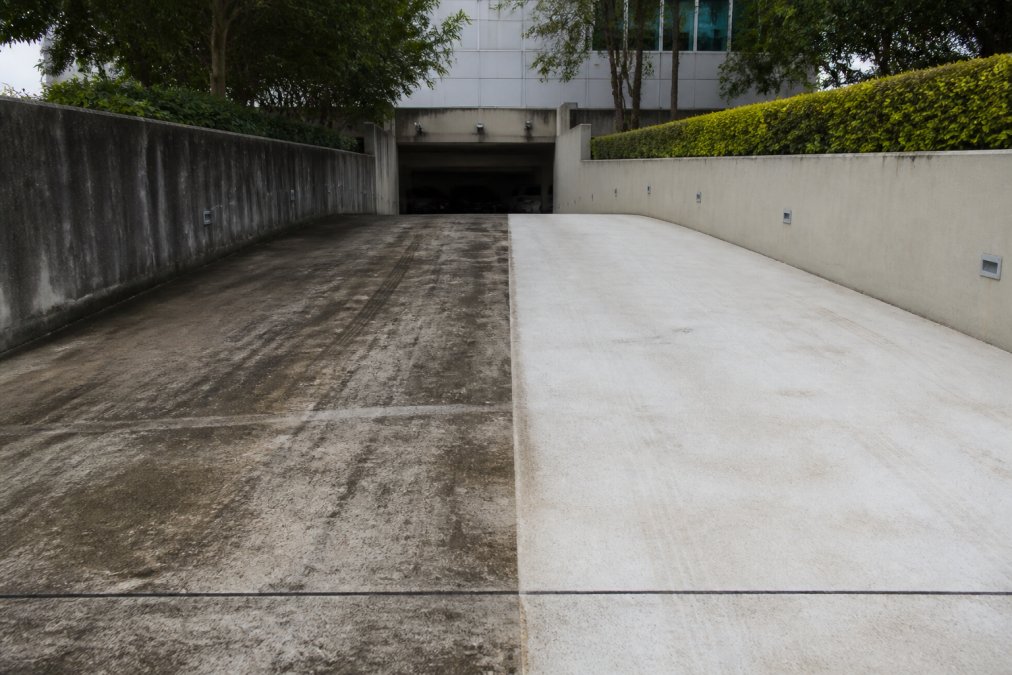
Recurring maintenance plans cost less per clean than one-off services, reduce long-term surface repair costs, and maintain consistent property presentation. The total cost of ownership calculation almost always favours the scheduled approach.
For facility managers working within annual budgets, a service agreement with fixed quarterly or bi-annual visits is easier to forecast and approve than unpredictable reactive cleaning invoices. Contact AquaBlast Elite directly for a site-specific quote.
Environmental Compliance and Water Runoff Regulations
Water runoff from commercial exterior cleaning is a regulated activity. The relevant framework in New South Wales is the Protection of the Environment Operations Act 1997 (NSW), which prohibits the discharge of polluted water to stormwater drains. During pressure washing, water carrying detergents, biological material, and hydrocarbons becomes contaminated and cannot legally be directed to stormwater infrastructure.
Professional commercial cleaning operators manage runoff by blocking stormwater drains before cleaning, using containment berms around the work area, and collecting wastewater for disposal through the sewer system or via a licensed liquid waste contractor.
The NSW Environment Protection Authority’s guidelines on trade waste and stormwater provide specific guidance on pollution events and penalties. Fines for unlawful discharge can be substantial, and liability can extend to the property owner or manager if the contractor’s practices are inadequate.
When selecting a commercial exterior maintenance provider, ask specifically how they manage wastewater. A provider that cannot give a clear answer is a compliance risk.
How to Set Up a Commercial Exterior Maintenance Plan
Setting up a commercial exterior maintenance plan is a five-step process.
Step 1: Commission a Site Assessment
A professional site assessment maps every external surface, identifies current condition, notes any existing damage, and documents access requirements.
Step 2: Define the Scope and Frequency
Based on the assessment, agree on which surfaces are included, which cleaning method applies to each, and how often each zone is serviced.
Step 3: Confirm Environmental and Safety Protocols
Confirm in writing how the provider manages wastewater, what safety protocols apply, and whether they carry appropriate public liability insurance.
Step 4: Establish Documentation and Reporting
A professional maintenance plan includes service records for each visit: date, surfaces cleaned, methods used, and any issues observed.
Step 5: Schedule the First Service and Review Cycle
Lock in the first service date and set a calendar reminder for the 12-month review.
AquaBlast Elite handles the site assessment, scoping, and documentation as part of the onboarding process for commercial exterior maintenance plans. Book a call to arrange an initial assessment for your property.
Maintaining a commercial property’s exterior to a consistent standard is an asset protection strategy, a compliance obligation, and a direct input to how tenants, customers, and visitors perceive the property. AquaBlast Elite provides commercial exterior maintenance plans that cover everything from high-pressure car park cleaning to soft-wash facade treatment and graffiti removal, with full wastewater management and service documentation included. Book a call with the AquaBlast Elite team to get a site-specific assessment and maintenance plan for your property.
Frequently Asked Questions
Q: What is included in a commercial exterior maintenance plan?
A: A commercial exterior maintenance plan typically covers scheduled pressure washing and soft washing of building facades, car parks, driveways, footpaths, and common areas. It also includes mould and algae removal, graffiti removal, and surface build-up treatment. Plans are tailored to the property type, cleaning frequency, and specific surfaces involved, with a service agreement that outlines visit schedules, scope, and safety protocols. A site assessment is usually the starting point for building a customised plan.
Q: How often should commercial buildings have exterior cleaning?
A: Commercial pressure washing frequency depends on the property type, location, and foot traffic. High-traffic retail and hospitality properties generally benefit from quarterly cleaning, while office buildings and strata complexes often schedule biannual or annual services. Properties in areas with high humidity, tree coverage, or heavy vehicle movement may need more frequent attention to prevent surface build-up, mould growth, and safety hazards. A professional site assessment will identify the right cleaning frequency for your specific asset.
Q: What are the benefits of a recurring exterior maintenance contract?
A: Recurring commercial exterior maintenance contracts reduce long-term costs by preventing the deep surface degradation that requires expensive restoration work. They keep property presentation consistent, which matters for tenant retention, customer first impressions, and asset valuation. Scheduled plans also make budgeting predictable, ensure environmental compliance with each visit, and mean your facility manager spends less time sourcing one-off contractors. Over a 12-month period, a maintained surface is significantly cheaper to clean than one left to deteriorate.
Q: Does exterior maintenance help with strata compliance?
A: Yes. Under the Strata Schemes Management Act 2015 (NSW), owners corporations have a legal obligation to maintain common property in good repair. Regular strata exterior cleaning services address this directly by keeping facades, car parks, and shared areas clean and structurally sound. Documented service agreements also provide evidence of proactive maintenance, which can be relevant during strata inspections or disputes. A professional cleaning provider familiar with strata requirements can align visit schedules with your by-laws and annual maintenance plans.
This article was written using GrandRanker