
Table of Contents
- What You’ll Need: Tools and Equipment for Safe Concrete Cleaning
- Preparation and Surface Clearing
- Choosing the Right Cleaning Solutions for Concrete
- Step-by-Step Process: How to Clean Concrete Without Damage
- How to Remove Oil Stains from Concrete
- Preventing Mold Regrowth on Exterior Walls and Concrete
- High Pressure Cleaning Concrete Safety
- Common Mistakes to Avoid When Cleaning Concrete
- Frequently Asked Questions
Last Updated: August 31, 2026
What You’ll Need: Tools and Equipment for Safe Concrete Cleaning
Cleaning concrete without damage starts with the right equipment. Using inappropriate tools or pressure settings can etch surfaces, strip sealers, or leave permanent marks. A pressure washer delivering 1,500-3,000 psi is essential for residential concrete; industrial equipment exceeding 4,000 psi damages surfaces, particularly older concrete (the CDC). A surface cleaner attachment distributes pressure evenly and significantly reduces etching risk.
You’ll also need quality brushes for pre-treatment and spot cleaning, and a rotary or oscillating scrubber for stubborn stains. Safety equipment is non-negotiable: heavy-duty gloves, safety goggles (concrete debris and chemical splash pose serious eye hazards), and slip-resistant boots. Many professionals wear long sleeves and trousers to protect skin from chemicals and accidental spray.
Additional tools include a damp mop for final cleanup, buckets for mixing solutions, and a pH meter to verify your cleaning solutions won’t damage the concrete. If your concrete is sealed, identify the sealer type before applying any chemicals.
Preparation and Surface Clearing
Proper preparation determines whether results will be pristine or problematic. Surface preparation prevents chemical reactions that stain or damage concrete and ensures cleaning solutions work on actual dirt rather than loose debris.
Start by sweeping thoroughly with a stiff broom, paying special attention to cracks and joints. Pressure wash at low pressure (under 1,500 psi) with a wide-angle nozzle to dislodge remaining dust and loose particles.
Identify and address vegetation or moss growth. If mold or mildew is present, light scrubbing with a soft brush before chemical treatment prevents the solution from simply washing spores around. Allow pre-treatment solution to dwell for 10-15 minutes before scrubbing; this allows the chemical to penetrate and kill the organism rather than just removing surface growth.
Check for cracks or damaged areas. Compromised concrete absorbs cleaning solutions more readily and may deteriorate further under pressure. Mark these areas so you can adjust your technique accordingly. If your concrete is sealed, verify the sealer type; different sealers react differently to various cleaning solutions and pressure levels.
Choosing the Right Cleaning Solutions for Concrete
Concrete is porous and slightly alkaline by nature (peer-reviewed research). Using highly acidic or highly alkaline solutions can trigger chemical reactions that etch the surface, change its colour, or weaken the aggregate. Select pH-neutral or mildly alkaline cleaners that dissolve dirt without damaging concrete.
For general dirt and light staining, a pH-neutral detergent designed for concrete is your safest choice. These cleaners remove surface grime without risk of etching or discolouration.
Trisodium phosphate (TSP) is a traditional alkaline cleaner effective for moderate dirt and some organic growth. It won’t etch concrete, but it can strip certain sealers if left in contact too long. If you use TSP, rinse thoroughly within 15-20 minutes of application.
For mold and mildew, a mildewcide-based cleaner or dilute bleach solution (1 part bleach to 10 parts water) can be effective (the CDC). However, bleach is highly alkaline and can cause discolouration. Test any bleach solution on an inconspicuous area first.
Never use muriatic acid (hydrochloric acid) unless addressing efflorescence or with professional guidance. Acid-based cleaners are extremely aggressive and can permanently damage concrete. Always test your chosen cleaner on a hidden area first, allowing 24 hours to check for discolouration or damage before treating the entire surface.
Step-by-Step Process: How to Clean Concrete Without Damage
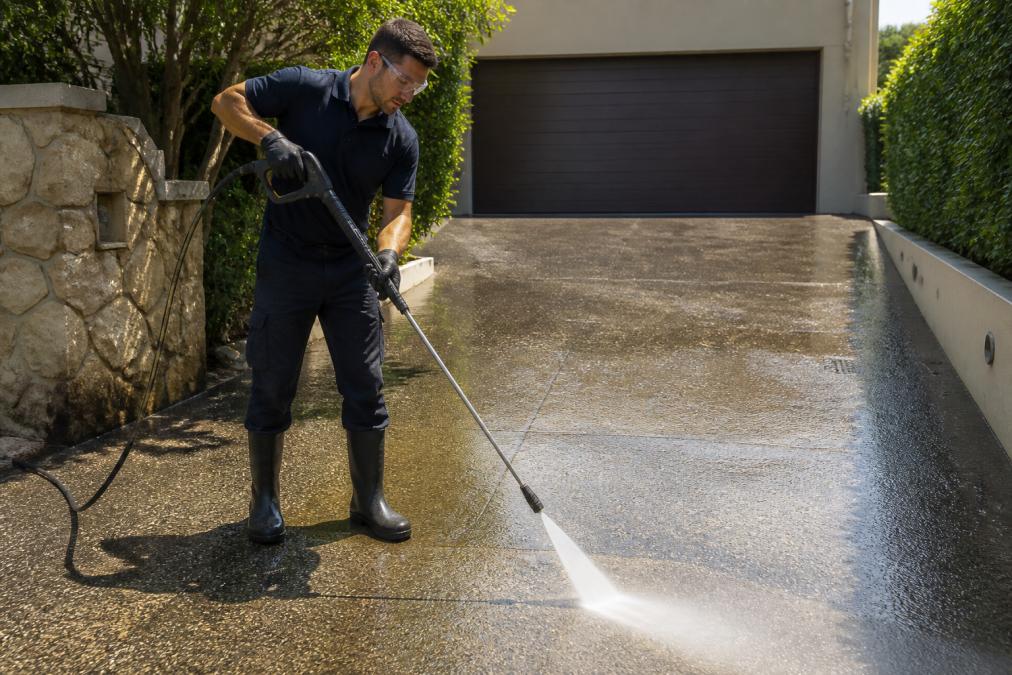
Cleaning concrete without damage follows a logical sequence that protects your surface whilst removing dirt effectively.
Step 1: Prepare and Clear the Area (Time: 15-20 minutes)
Remove all loose debris, vehicles, and obstacles. Sweep thoroughly with a stiff broom, working debris out of cracks and joints.
Step 2: Apply Pre-Treatment Solution (Time: 10-15 minutes application, plus dwell time)
Mix your chosen cleaning solution according to manufacturer instructions. Apply using a low-pressure sprayer or by pouring and spreading with a brush. Allow the solution to dwell; this critical step allows the cleaner to break down dirt chemically. For light dirt, 5-10 minutes is sufficient. For heavy staining or mold, 15-20 minutes allows proper penetration.
Step 3: Scrub Problem Areas (Time: 10-15 minutes)
Using a stiff-bristled or soft-bristled brush depending on concrete condition, scrub areas with visible staining or growth. This mechanical action combined with chemical dwell time does most of the actual cleaning.
Step 4: Rinse Thoroughly (Time: 15-20 minutes)
Using your pressure washer at 1,500-2,500 psi with a 25-40 degree nozzle, rinse the entire surface. Start from the highest point and work downward. Keep the nozzle moving; holding it in one spot risks etching. Maintain at least 30 centimetres distance from the surface. Complete removal of all cleaning solution and loosened dirt is essential.
Step 5: Final Inspection and Touch-up (Time: 5-10 minutes)
Once the concrete dries completely (allow 24 hours), inspect for remaining stains. Stubborn marks may require a second application of cleaner and gentle pressure washing. Avoid increasing pressure on problem areas; instead, apply cleaner again and allow longer dwell time.
Step 6: Allow Proper Curing (Time: 48-72 hours before sealing)
If you plan to apply sealer, wait at least 48 hours after cleaning to allow the concrete to fully dry. Applying sealer to damp concrete traps moisture and causes adhesion problems.
How to Remove Oil Stains from Concrete
Oil stains penetrate into the porous concrete structure, unlike dirt which sits on the surface. Fresh oil stains, caught within days of the spill, respond well to absorbent materials and degreaser. Sprinkle baking soda or cat litter over the fresh spill to absorb surface oil, then dispose of the saturated material. Follow with a commercial degreaser applied according to product instructions, allowing adequate dwell time before pressure washing.
Older, set-in oil stains require more aggressive treatment. A trisodium phosphate solution combined with a degreaser works better than either product alone. Apply the mixture, allow 20-30 minutes of dwell time, scrub thoroughly with a stiff brush, and rinse at moderate pressure (1,500-2,000 psi). Repeat if necessary, but resist increasing pressure; multiple applications with adequate dwell time work better than one high-pressure attempt.
For extremely stubborn oil stains that have penetrated deep into the concrete, concrete etching may be necessary. This process uses a mild acid to open the concrete’s pores further, allowing degreaser to penetrate deeper. However, etching is aggressive and should only be attempted if other methods fail, as it permanently changes the concrete’s surface texture. Professional services like AquaBlast Elite have the expertise to assess whether etching is appropriate for your specific situation.
Never use petrol or other solvents to dissolve oil stains; these are toxic, environmentally harmful, and drive oil deeper into the concrete. Stick to purpose-designed degreasers and allow chemistry and time to do the work.
Preventing Mold Regrowth on Exterior Walls and Concrete
Mold thrives in damp, shaded environments with organic matter present. After cleaning, allow concrete to dry completely before applying any protective treatment. A mildewcide-based sealer or a sealer with built-in mold inhibitors can significantly slow regrowth. Reapply these protective sealers every 2-3 years depending on your climate and exposure.
Improve drainage around the concrete surface. Ensure gutters and downpipes direct water away from concrete surfaces. If concrete is in a low-lying area that collects water, consider adding drainage or grading the surrounding soil to improve water flow.
Increase air circulation and sunlight exposure where possible. Trim back overhanging branches to allow more sunlight onto the concrete. Sunlight is a natural mold inhibitor, and increased air circulation helps concrete dry faster after rain.
Regular cleaning prevents mold from establishing a thick colony. A light cleaning every 6-12 months, even before visible growth appears, is far easier than deep cleaning heavily colonised surfaces.
High Pressure Cleaning Concrete Safety
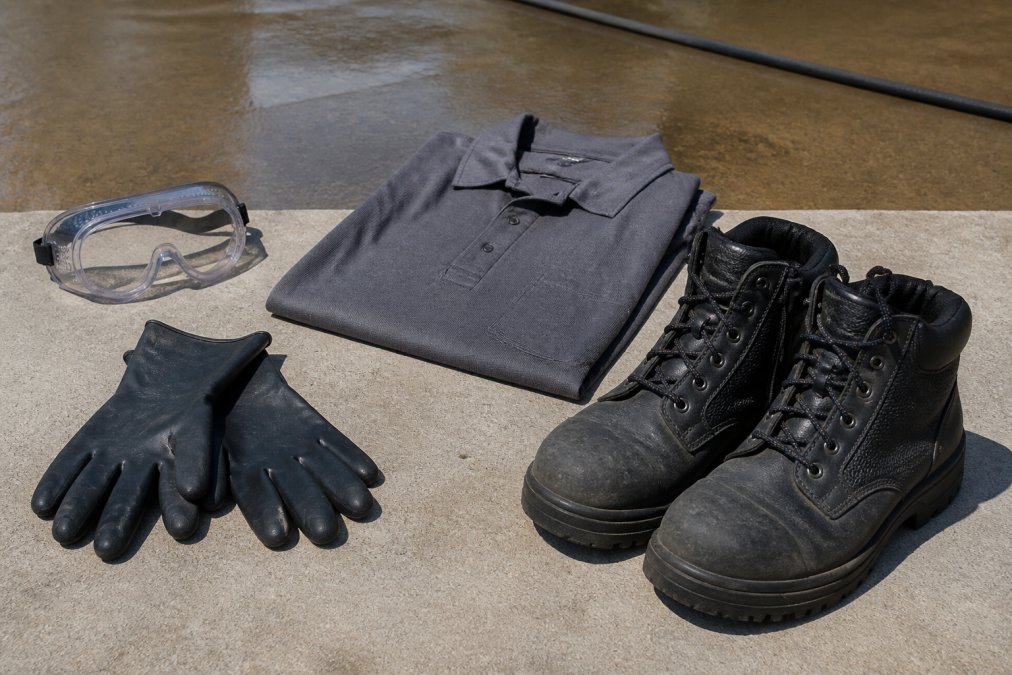
High-pressure equipment is powerful and dangerous when misused. Pressure is measured in psi; 1,500 psi is enough to remove paint, whilst 3,000 psi can cut skin. Never point a pressure washer at yourself, another person, or animals. Maintain firm footing and brace yourself against the recoil.
Always wear appropriate protective equipment: safety goggles, heavy-duty gloves, slip-resistant boots with good ankle support, and long sleeves and trousers. Hearing protection is advisable, as pressure washers are loud.
Before starting, inspect your equipment for damage. Test on a low-pressure setting away from people and property before beginning work. Start with lower pressure settings and increase gradually. Maintain at least 30 centimetres distance from the concrete surface. Avoid pointing the nozzle at windows, vents, or areas where high-pressure spray could force water into buildings.
Chemical safety is equally important. Wear gloves and goggles when handling chemicals. Mix solutions in well-ventilated areas and avoid breathing fumes. Never mix different cleaning products. Read all product safety information before use and follow dilution instructions precisely.
Common Mistakes to Avoid When Cleaning Concrete
The most common mistake is using excessive pressure. Homeowners often assume higher pressure means better cleaning, but 3,500+ psi damages concrete, strips sealers, and etches surfaces. Start at 1,500 psi and increase only if necessary.
Skipping the dwell time is equally damaging to results. Dwell time, allowing the chemical to sit on the surface for 10-20 minutes, is when the actual cleaning happens chemically. Pressure washing without adequate dwell time means relying entirely on mechanical force, which requires higher pressure and causes more damage.
Holding the pressure washer nozzle too close to the surface causes etching and striping. Maintain at least 30 centimetres distance and keep the nozzle moving constantly.
Using the wrong cleaning solution damages concrete chemistry. Always use pH-neutral cleaners unless you have specific reason to use something stronger, and test on an inconspicuous area first.
Neglecting sealer compatibility is a mistake that shows up later. If your concrete is sealed, verify the sealer type before choosing a cleaner. After cleaning sealed concrete, reapply sealer within a few weeks to restore protection.
Avoid cleaning if rain is forecast within 24 hours, as water prevents proper drying. Don’t clean in direct sunlight if using chemical solutions, as heat accelerates drying and can cause uneven results. Overcast days with temperatures between 10-25°C are ideal.
Finally, incomplete rinsing leaves residue that attracts new dirt and can cause discolouration. Rinse thoroughly until all visible cleaning solution and loosened dirt are gone.
Cleaning concrete without damage is entirely achievable when you understand the chemistry involved and respect the equipment you’re using. The difference between a pristine result and permanent damage often comes down to patience, allowing adequate dwell time, using appropriate pressure, and choosing the right cleaning solution for your specific situation.
For residential properties where results matter and mistakes are costly, professional services like AquaBlast Elite bring expertise that prevents common errors homeowners make. We assess sealer compatibility, adjust pressure and dwell time based on concrete condition, and ensure complete protection of surrounding areas. BOOK A CALL to discuss your concrete cleaning needs and get a customised solution.
Frequently Asked Questions
What’s the safest way to clean concrete without damaging the surface?
Start with low-pressure washing at 1500-2000 PSI and pH-neutral detergent. Test a small, inconspicuous area first. For delicate surfaces like newly poured concrete or thin overlays, hand-scrubbing with a soft brush and alkaline cleaner is safer. Always allow adequate dwell time (10-15 minutes) for the cleaning solution to work before rinsing. Avoid aggressive pressure above 3000 PSI unless the concrete is thick and well-cured, and never use pressure washers on surfaces with active sealers without checking compatibility first.
Can you clean concrete with vinegar or baking soda instead of harsh chemicals?
Yes. White vinegar works well for mild stains and efflorescence on concrete, though it’s less effective on heavy grease. Baking soda mixed with water creates a gentle abrasive paste for scrubbing. Both are pH-neutral to slightly acidic and safe for most concrete. However, they work more slowly than commercial degreasers on oil stains or mildew. For stubborn stains, a combination approach, vinegar or baking soda first, followed by a low-pressure rinse, often delivers better results than either alone.
How do professionals clean concrete to avoid surface pitting and damage?
Professionals assess concrete age, curing status, and sealer compatibility before starting. They use surface cleaner attachments to distribute pressure evenly, preventing the concentrated jet damage that causes pitting. They maintain consistent distance (typically 30-45 cm) and avoid dwelling in one spot. They choose appropriate PSI based on concrete condition: new or thin concrete gets 1500-2000 PSI, mature uncoated concrete gets 2500-3000 PSI. They also check runoff and environmental impact, using containment or biofilters where required by local regulations.
What should you never use to clean concrete?
Avoid muriatic (hydrochloric) acid unless absolutely necessary for heavy efflorescence, it can etch concrete permanently and poses serious safety hazards. Never use bleach on sealed concrete or where runoff will harm plants. Avoid pressure above 4000 PSI on residential concrete, as it causes aggregate exposure and surface degradation. Do not use trisodium phosphate on newly sealed surfaces without verifying compatibility. Never mix cleaning products (vinegar with bleach, for example), as chemical reactions can produce toxic fumes. Always check product labels and test incompatible combinations on a hidden area first.
This article was written using GrandRanker