
Table of Contents
- Pressure Washing Safety: What You Need to Know Before You Start
- Protective Equipment for Pressure Washing: Your Non-Negotiable Gear
- Safe Pressure Washing for Residential Siding, Windows, and Wood
- Electrical Safety, GFCI Outlets, and Cord Management
- Pressure Washing Safety Tips: Technique, Distance, and Common Mistakes
- Environmental Runoff and Chemical Exposure Safety
- When to Call Professional Pressure Cleaning Services
- Frequently Asked Questions
Last Updated: August 29, 2026
Pressure Washing Safety: What You Need to Know Before You Start
Pressure washing looks simple until you realize a high-pressure stream of water can strip paint, etch concrete, and cause serious injury in seconds. Pressure washing safety is non-negotiable.
Pressure washing safety is non-negotiable. According to Safe Work Australia’s guidance on high-pressure equipment hazards, high-pressure fluid injection injuries are classified as medical emergencies that can result in amputation if not treated within hours.
Pre-Cleaning Inspection Checklist
Before starting, walk the area in five minutes to prevent most accidents.
- Inspect the hose for cracks, kinks, or worn fittings; a burst hose causes immediate recoil and injury
- Check all nozzle tips for blockages or damage
- Identify all electrical outlets, power lines, and light fittings in the work area
- Clear the zone of children, pets, and bystanders; maintain at least 3 metres from the spray area
- Confirm the water supply connection is secure
- Locate the trigger lock and test the shut-off procedure before pressurising
- Check for loose or damaged window seals, cracked render, or rotted timber
Understanding PSI Ratings and GPM
PSI (pounds per square inch) measures water force. GPM (gallons per minute) measures volume delivered. Together, they determine cleaning power and damage potential.
Most residential machines operate between 1,400 and 3,100 PSI. A common mistake is buying the most powerful unit available, which often results in damaged surfaces instead of faster cleaning. Match the PSI to the task using the surface-specific guide below.
Protective Equipment for Pressure Washing: Your Non-Negotiable Gear
Skipping PPE is the fastest way to turn a weekend job into a serious injury. The water stream can lacerate skin at close range, and debris travels at speed in every direction.
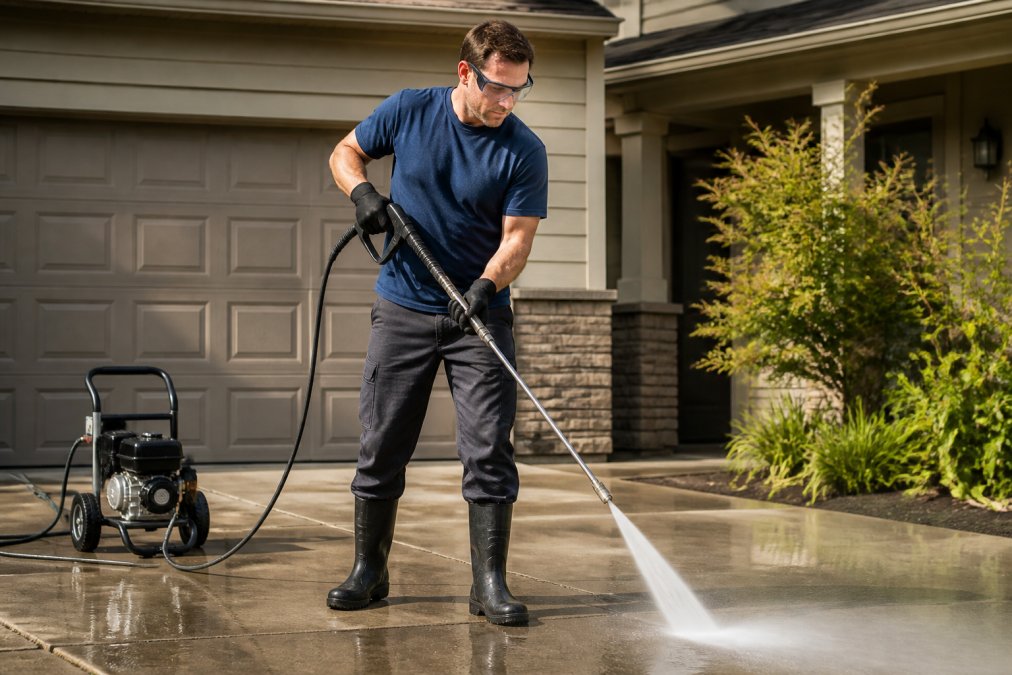
Protective equipment is not optional. The minimum gear required:
Eye protection: Safety goggles rated to AS/NZS 1337 provide wraparound coverage against debris deflection. Standard glasses are insufficient.
Footwear: Non-slip closed-toe boots with rubber soles are essential. Wet surfaces become extremely slippery, and a fall while holding an active wand is dangerous.
Clothing: Long trousers and long sleeves reduce lacerations from debris and accidental spray contact. Avoid loose clothing that can catch on fittings.
Hearing protection: Petrol-powered units exceed safe noise exposure thresholds under Safe Work Australia noise exposure standards. Use ear plugs or muffs for sessions longer than 30 minutes.
Gloves: Heavy-duty rubber or nitrile gloves protect against chemical exposure and provide grip on the wand.
Many homeowners wear gardening gloves for pressure washing. These offer almost no protection. Use rubber or nitrile gloves rated for chemical handling.
Safe Pressure Washing for Residential Siding, Windows, and Wood
Safe pressure washing for residential siding requires a different approach than concrete cleaning. The core principle: softer or more porous surfaces need lower pressure and wider spray angles. Getting this wrong causes expensive or irreversible damage.
Surface-Specific PSI Guide
Use this table as your starting reference. Adjust downward if the surface shows existing damage, weathering, or age.
| Surface | Recommended PSI | Nozzle Tip | Notes |
|---|---|---|---|
| Concrete driveways | 2,500 – 3,000 PSI | 25° or 15° | Keep wand moving; avoid dwelling |
| Brick and render | 1,500 – 2,000 PSI | 25° | Test a small patch first |
| Timber decks | 500 – 1,200 PSI | 40° fan tip | Always work with the grain |
| Vinyl siding | 1,200 – 1,500 PSI | 40° fan tip | Avoid directing spray upward into gaps |
| Painted surfaces | 1,000 – 1,500 PSI | 40° fan tip | Lower end for older paint |
| Windows and frames | 1,200 PSI max | 40° fan tip | Keep distance at 600mm+ minimum |
| Roof tiles | 1,500 PSI max | 40° | Risk of cracking; professional preferred |
Siding etching is permanent when excessive pressure or a zero-degree nozzle is held too close. Window seal integrity is another frequent casualty; once breached, condensation forms inside double-glazed panes and replacement is the only fix.
Nozzle Tips and Spray Pattern Selection
The colour-coded nozzle tip system is standard across most residential machines:
- Red (0°): Zero-degree nozzle produces a concentrated pinpoint stream. This is a cutting tool with almost no place in residential use and causes instant surface damage if held close.
- Yellow (15°): Narrow fan tip for heavy-duty concrete and stripping. Use with care and keep moving.
- Green (25°): General-purpose tip for concrete, brick, and exterior walls.
- White (40°): Wide fan tip, lower impact. Correct choice for timber, siding, and windows.
- Black (65°): Low-pressure tip for applying detergent. Not a cleaning tip.
Never use a zero-degree nozzle on timber, siding, or painted surfaces. A single pass at close range can gouge wood or strip paint permanently. Start with the 40° tip and work up only if necessary.
Electrical Safety, GFCI Outlets, and Cord Management
Electric pressure washers introduce shock risk when water and power share a space. Always plug into a GFCI outlet (in Australia, a residual current device or RCD). An RCD detects earth leakage and cuts power within milliseconds. If your outdoor power point lacks RCD protection, use a portable RCD adapter. This aligns with AS/NZS 3000 Wiring Rules and RCD requirements for outdoor power.
Use only heavy-duty outdoor-rated extension cords at the gauge recommended by the manufacturer. Keep all cord connections off the ground and away from water pooling areas.
For petrol-powered units, carbon monoxide poisoning is the hazard. Never operate in an enclosed space, garage, carport with low clearance, or any area without cross-ventilation. Carbon monoxide is odourless and accumulates rapidly. Ventilation is a survival requirement.
If using an electric pressure washer outdoors, RCD protection is mandatory. If using a petrol unit, ventilation is mandatory. Neither is negotiable.
Pressure Washing Safety Tips: Technique, Distance, and Common Mistakes
Proper technique is where most pressure washing safety tips either help or fail. The instinct to “get closer for a better clean” causes most injuries and surface damage.
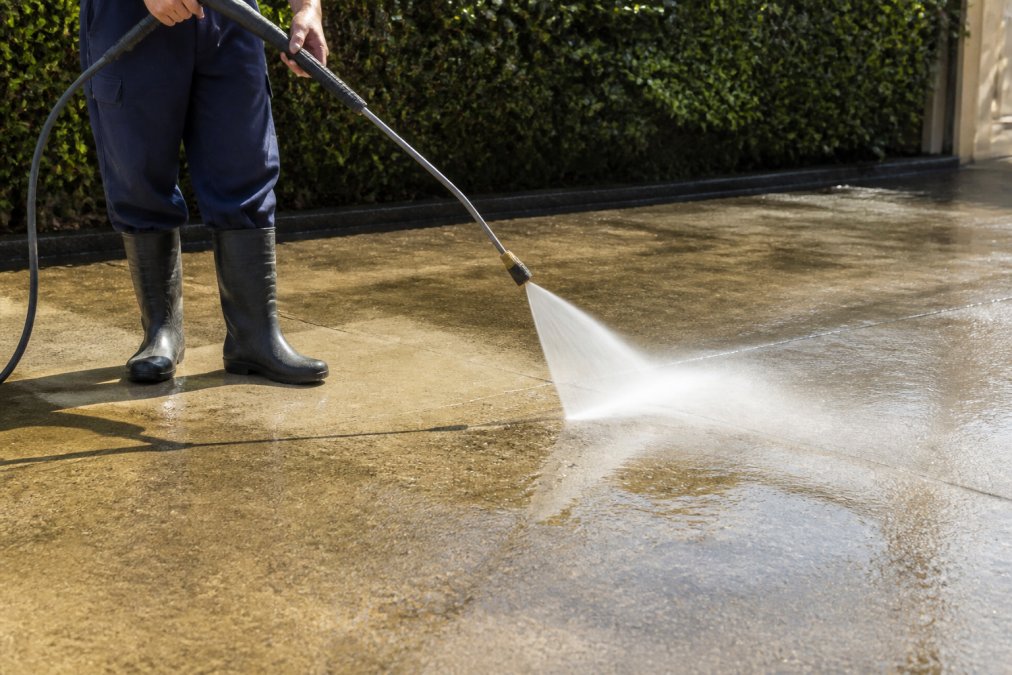
Start at least 600mm from the surface and move closer only if needed. Keep the wand moving in smooth, overlapping strokes; dwelling in one spot causes etching or gouging. The spray pattern should always be a fan tip at an angle, not perpendicular to the surface, which reduces kickback and improves coverage.
Maintain a firm two-handed grip and stable stance. Never operate from a position where losing balance would direct the spray toward yourself or bystanders.
Ladder Safety While Pressure Washing
Operating a pressure washer from a ladder combines two hazards: working at height and managing a tool with significant recoil. This combination causes a disproportionate number of serious injuries.
Avoid ladders wherever possible. For gutters, eaves, and upper-storey siding, an extension wand at ground level is far safer. If a ladder is unavoidable, use a platform ladder on stable level ground and never operate the wand one-handed while climbing or descending. Reduce PSI when working at height; you have less control, and high-pressure recoil can cause a fall.
Handling a High-Pressure Injection Injury
A high-pressure injection injury occurs when the fluid stream penetrates the skin. These injuries look minor on the surface but cause severe internal damage. The fluid disperses through tissue planes, causing inflammation, necrosis, and infection that can progress to amputation within 24 to 48 hours.
If a high-pressure injection injury occurs:
- Do not attempt home treatment. Do not squeeze or drain the entry point.
- Go immediately to a hospital emergency department.
- Tell the triage nurse exactly what happened: high-pressure water injection, the PSI, and the time of injury.
- Do not wait to see if symptoms develop. The entry wound will not reflect internal damage severity.
This is the most under-communicated risk in consumer pressure washing guidance. A fluid injection injury is a surgical emergency.
Environmental Runoff and Chemical Exposure Safety
Pressure washing generates significant runoff containing detergent residue, chemical cleaners, mould spores, paint flakes, and oil. Under the Protection of the Environment Operations Act 1997 (NSW), discharging pollutants to stormwater is an offence, and detergent runoff qualifies.
Practical steps to manage runoff:
- Use only biodegradable, low-phosphate detergents in the detergent tank
- Direct runoff away from stormwater drains and garden beds where possible
- For driveway cleaning involving oil or chemical staining, use absorbent materials to capture concentrated runoff
- Avoid pressure washing near waterways, sensitive garden beds, or areas where pets access the ground
Many cleaning concentrates are caustic or irritant. Read the safety data sheet before use, wear chemical-resistant gloves, and avoid mixing products. Mixing an alkaline degreaser with an acidic concrete cleaner creates reactions that release fumes and damage surfaces.
When to Call Professional Pressure Cleaning Services
Some jobs are beyond safe DIY scope, regardless of homeowner capability. Recognising that boundary is good judgement.
Call a professional pressure cleaning service when:
- The surface is fragile or high-value: Old timber decks, heritage render, sandstone, and terracotta roof tiles require specialist pressure regulation and technique. Professional cleaning costs far less than replacement.
- The job requires working at height: Upper-storey facades, gutters, and rooflines carry fall risk that professionals with appropriate equipment and training manage better.
- The contamination is hazardous: Graffiti removal, mould remediation, and oil or chemical staining often require commercial-grade products and containment procedures impractical for homeowners.
- You’ve had a bad DIY experience before: Siding etching, damaged window seals, or stripped decking indicate the previous approach was wrong. Professional assessment prevents repeating damage.
The AquaBlast Elite team handles these scenarios with commercial-grade equipment and surface-specific methodology. According to Australian Competition and Consumer Commission guidance on services and consumer guarantees, professional service providers are bound by consumer guarantee obligations under the Australian Consumer Law, meaning work must be performed with due care and skill. That accountability doesn’t exist when you hire a machine yourself.
The decision to call a professional is the right tool for the right job.
Frequently Asked Questions
Q: What protective gear is essential for residential pressure cleaning?
A: At minimum, wear safety goggles or a full face shield to guard against debris deflection and chemical exposure, non-slip footwear to prevent falls on wet surfaces, heavy-duty gloves, and long trousers. If you are using detergent in the tank, add a respirator or P2 dust mask. Never operate a pressure washer in thongs or bare feet, the high-pressure stream can penetrate skin in under a second, causing a serious fluid injection injury.
Q: What are the don’ts when pressure washing a house?
A: Never aim the nozzle at people, pets, or power lines. Avoid using a zero-degree nozzle on painted timber, window seals, or render, the concentrated stream causes surface damage and siding etching. Do not operate a petrol-powered unit indoors or in enclosed areas due to carbon monoxide poisoning risk. Never stand on a ladder while holding the wand, as kickback and recoil can throw you off balance. Skip the trigger lock when walking between areas, and always engage the shut-off procedure before changing nozzle tips.
Q: Are there surfaces that should never be cleaned with a pressure washer?
A: Yes. Asbestos-containing materials found in older homes must never be pressure washed, disturbing them releases hazardous fibres regulated under Safe Work Australia guidelines. Avoid directing high water pressure at single-pane windows, old mortar joints, air vents, and electrical panels. Soft weatherboard and aged timber with visible cracks are also high-risk; even moderate PSI settings can force water behind cladding, causing long-term moisture damage and rot.
Q: What should I spray my house with before pressure washing?
A: Apply a purpose-formulated exterior detergent from the machine’s detergent tank using a low-pressure soap tip, working from the bottom up to prevent streaking. Allow the solution to dwell for the time specified on the product label, usually three to five minutes, before rinsing from the top down. Avoid bleach-based products on painted timber, as they accelerate paint breakdown. Always rinse surrounding garden beds with plain water before and after applying any cleaning solution to reduce chemical exposure to plants.
Q: When should you hire a professional instead of DIY pressure washing?
A: Hire a professional when the job involves roofing, two-storey heights, asbestos-era materials, or large-scale concrete and graffiti removal. Professionals carry the correct pressure regulation equipment, public liability insurance, and trade-grade detergents that are not available to consumers. If you have an old timber deck, heritage render, or delicate window seal integrity to protect, a qualified operator can adjust the spray pattern and PSI precisely, reducing the risk of irreversible surface damage that DIY attempts often cause.
Q: How do I prevent property damage while using a high-pressure cleaner?
A: Match the PSI rating to the surface: use lower water pressure (under 1,400 PSI) for timber and painted surfaces, and reserve higher settings for bare concrete. Always start with a wide fan tip at least 30 centimetres from the surface, then move closer only if needed. Keep the nozzle moving to avoid etching one spot. Inspect the hose for cracks before each use, and test pressure on a small hidden area first. Covering garden beds and sealing nearby power outlets before you begin also prevents avoidable damage.
Pressure washing done carelessly causes surface damage, personal injury, and environmental harm that a little preparation prevents entirely. If your property needs a thorough clean and you want results that hold up, the AquaBlast Elite team brings the equipment, technique, and surface knowledge to do the job correctly the first time. Book a call with AquaBlast Elite to discuss your property’s specific needs and get a customised solution.
This article was written using GrandRanker