Table of Contents
- What You’re Actually Comparing When You Evaluate Local Providers
- Residential and Commercial Pressure Cleaning Services: What Each Should Cover
- Soft Washing vs Pressure Washing: Which Method Does Your Surface Need?
- Professional Pressure Cleaning Cost in Sydney: What Shapes the Price
- Environmental Impact and Chemical Safety in High-Pressure Cleaning
- How to Choose a Pressure Cleaning Company: A Practical Checklist
- Why AquaBlast Elite Stands Apart as a Pressure Cleaning Company
- Conclusion
Last Updated: August 28, 2026
Most homeowners searching for pressure cleaning services end up comparing two or three local names before making a decision. If you’ve been weighing up Aaron’s Pressure Washing vs Pete’s, you’re already asking the right question, but the more useful question is: what separates any two local providers, and how do you know which one will actually protect your surfaces rather than damage them? This guide from AquaBlast Elite breaks down exactly what to look for, what to ask, and how to avoid the most common mistakes people make when hiring a pressure cleaning company.
The short answer is that provider names matter far less than the criteria you use to evaluate them. Below, we’ll walk you through service scope, cleaning methods, cost drivers, environmental considerations, and a practical checklist that applies whether you’re comparing two local operators or a dozen.
What You’re Actually Comparing When You Evaluate Local Providers
Evaluating local pressure cleaning providers is less about brand recognition and more about operational standards. Two businesses can have identical names and vastly different results, because high-pressure cleaning outcomes depend on equipment calibration, surface knowledge, and chemical selection, not marketing.
When homeowners compare options like Aaron’s Pressure Washing vs Pete’s, they’re often looking at star ratings and price. Those are reasonable starting points, but they miss the variables that determine whether your driveway looks brand new or your timber deck ends up splintered. The real comparison framework should cover: service range, method selection, licensing status, insurance coverage, and how each operator handles surface-specific risk.
A common mistake is choosing purely on price. The cheapest quote often reflects lower equipment grade, less experienced operators, or a one-size-fits-all approach that ignores surface integrity. Surface restoration done poorly can cost significantly more to fix than the original clean would have saved you.
Never hire a pressure cleaning operator who can’t confirm their public liability insurance on the spot. If something goes wrong on your property, a cracked tile, damaged render, or flooding into a neighbour’s yard, you’re exposed without it.
Residential and Commercial Pressure Cleaning Services: What Each Should Cover
Professional pressure cleaning services split into two distinct categories, each with its own equipment requirements, chemical protocols, and risk profiles. Understanding what each category should include helps you identify whether a provider is genuinely equipped for your job.
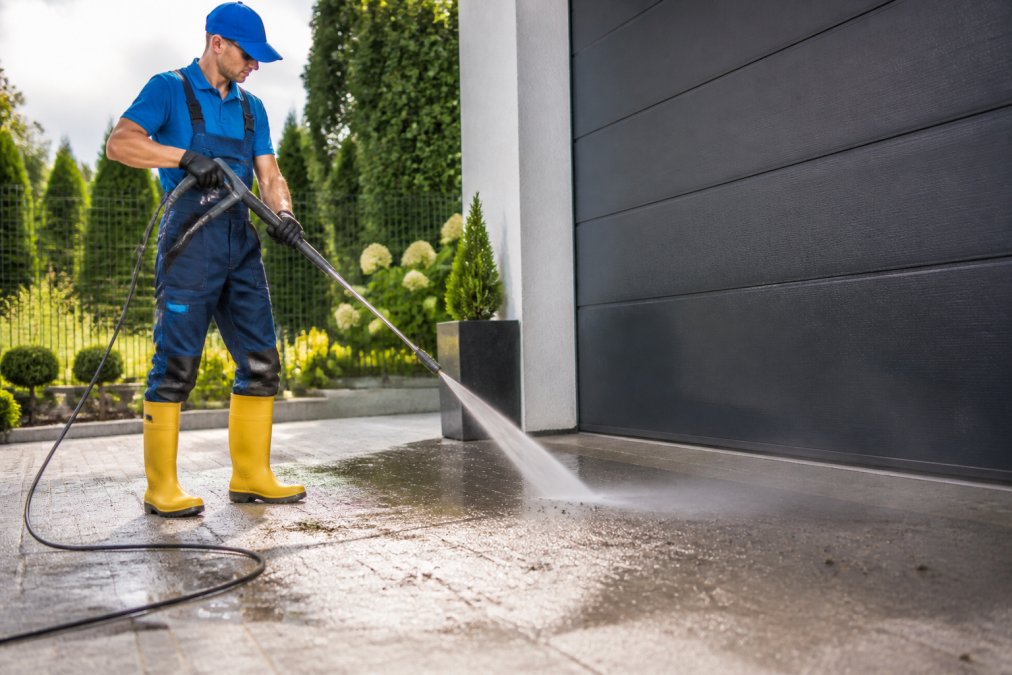
Residential Exterior Washing and Surface Restoration
Residential pressure cleaning should cover driveways, pathways, house exteriors, decks, patios, fences, and roof surfaces. Each surface carries different risk. Concrete can handle higher water pressure; timber decking, render, and older brick require regulated pressure and, in many cases, soft washing rather than direct high-pressure application.
Surface restoration on a residential property also means mould and mildew treatment, stain removal from organic matter, and debris removal from gutters and downpipe surrounds. A provider who only offers a single pressure setting across all surfaces is cutting corners. Proper residential exterior washing requires adjusting water pressure regulation for each material type, and knowing when to stop before surface integrity is compromised.
Curb appeal matters most when you’re preparing a property for sale. Many real estate agents book exterior cleans in the weeks before listing precisely because a clean driveway and house facade can meaningfully shift a buyer’s first impression.
Commercial Property Maintenance and Strata Cleaning
Commercial pressure cleaning demands a different scale of operation. Strata cleaning for apartment blocks, retail precincts, and commercial car parks involves large surface areas, often with multiple surface types in a single job. Industrial grade equipment is non-negotiable at this scale, consumer-grade machines simply can’t sustain the throughput required.
Commercial property maintenance should also include graffiti removal, which requires specific chemical solutions and surface knowledge to avoid ghosting or discolouration. Regular preventative maintenance schedules, rather than reactive one-off cleans, are standard practice for commercial property managers who want to control long-term costs and maintain a professional appearance year-round. According to Property Council of Australia guidance on commercial property standards, consistent exterior maintenance directly supports asset value and tenant retention.
Soft Washing vs Pressure Washing: Which Method Does Your Surface Need?
Soft washing is a low-pressure cleaning method that relies on biodegradable cleaning solutions to break down organic growth, mould, algae, and grime before rinsing, rather than blasting surfaces with high-pressure water. Pressure washing uses high-velocity water to physically dislodge dirt and debris from hard, durable surfaces.
The choice between soft washing vs pressure washing depends entirely on the surface. Roof cleaning is the clearest example: high-pressure water on terracotta or Colorbond roofing can dislodge mortar, crack tiles, or void manufacturer warranties. Soft washing treats the biological growth at the source without mechanical force. The result lasts longer and carries far less risk of damage.
Concrete driveways, brick paving, and stone surfaces generally respond well to high-pressure cleaning. Timber decks, painted surfaces, render, and roofing almost always require soft washing or carefully regulated low-pressure application. Any operator who doesn’t raise this distinction when quoting your job hasn’t assessed your surfaces properly.
Ask any prospective provider: “What pressure setting will you use on my [specific surface], and why?” If they can’t give you a specific answer with a reason, that’s a red flag. Experienced operators will explain their method before you ask.
Professional Pressure Cleaning Cost in Sydney: What Shapes the Price
Professional pressure cleaning cost varies based on several factors, none of which are arbitrary. Surface area is the most obvious driver, but it’s rarely the only one. Surface condition, access difficulty, chemical requirements, and the number of surface types involved all affect how long a job takes and what equipment is needed.
Roof rejuvenation, for example, typically takes longer and requires specialist equipment compared to a standard driveway clean. Strata cleaning for a multi-storey complex involves staging, safety compliance, and often out-of-hours scheduling to avoid disrupting residents. These factors all feed into the final quote.
Because pricing varies significantly between operators and job types, AquaBlast Elite provides customised quotes based on a proper site assessment. Requesting a quote before committing is always the right move, any provider who quotes a flat rate without seeing your property is guessing.
DIY vs Professional High-Pressure Cleaning: The Real Cost-Benefit
The DIY vs professional high-pressure cleaning question comes up often, and the honest answer is that DIY is appropriate for a narrow set of tasks. Cleaning a small concrete path with a hire machine is manageable for most homeowners. Cleaning a two-storey house exterior, a large driveway with embedded oil stains, or a tiled roof is a different matter entirely.
Hire equipment from a hardware store typically runs at lower pressure ratings than professional industrial grade machines, and without the correct nozzle selection and technique, you risk surface damage, uneven results, or simply moving dirt around without removing it. There’s also the safety dimension: working at height with pressurised water equipment carries real risk, and Safe Work Australia guidelines on working at height make clear that appropriate controls are required even for short-duration tasks.
The cost-benefit calculation shifts quickly once you factor in hire costs, chemical purchase, time, and the risk of a mistake that requires professional remediation. For anything beyond basic flat surfaces, professional service standards deliver better value.
| Task | DIY Suitability | Professional Advantage |
|---|---|---|
| Small concrete path | Manageable | Faster, cleaner finish |
| Full driveway with stains | Moderate risk | Correct chemicals, better results |
| House exterior washing | High risk | Surface-safe pressure settings |
| Roof cleaning | Not recommended | Specialist equipment, no damage risk |
| Graffiti removal | Not recommended | Chemical expertise, no ghosting |
| Strata/commercial surfaces | Not suitable | Industrial grade equipment, compliance |
Environmental Impact and Chemical Safety in High-Pressure Cleaning
Environmental impact is an area most providers don’t discuss proactively, which is precisely why it’s worth raising before you book. Pressure cleaning generates runoff that can carry detergents, mould spores, heavy metals from surfaces, and sediment into stormwater drains. Under NSW Environment Protection Authority stormwater pollution guidelines, allowing contaminated runoff to enter stormwater systems is a compliance issue, not just an environmental concern.
Responsible operators use biodegradable cleaning solutions, contain runoff where possible, and avoid applying harsh chemicals near garden beds, water features, or permeable surfaces. Chemical safety also matters for the people on your property: poorly diluted or incorrectly applied chemicals can damage plants, irritate skin, and leave residue on surfaces that contact children or pets.
When evaluating providers, ask specifically what cleaning solutions they use, whether they’re biodegradable, and how they manage runoff on your site. An operator who can answer this clearly has thought through their process. One who dismisses the question hasn’t.
Environmental compliance in pressure cleaning isn’t a premium add-on, it’s a baseline professional standard. Operators who ignore runoff management are cutting corners in a way that can expose you to liability as the property owner.
How to Choose a Pressure Cleaning Company: A Practical Checklist
Choosing a pressure cleaning company comes down to verifying a short list of non-negotiable criteria before any price discussion. The checklist below applies regardless of which providers you’re comparing.
- Confirm current public liability insurance (ask for the certificate, not just a verbal confirmation)
- Verify the operator can explain their method for each surface type on your property
- Check whether they use soft washing for appropriate surfaces (roofs, timber, render)
- Ask about their chemical products and environmental runoff management
- Request references or before-and-after photos from comparable jobs
- Confirm they’re familiar with safety compliance requirements for your job type
- Get a written quote that itemises surface types and methods, not just a total price
- Ask about cleaning frequency recommendations for ongoing preventative maintenance
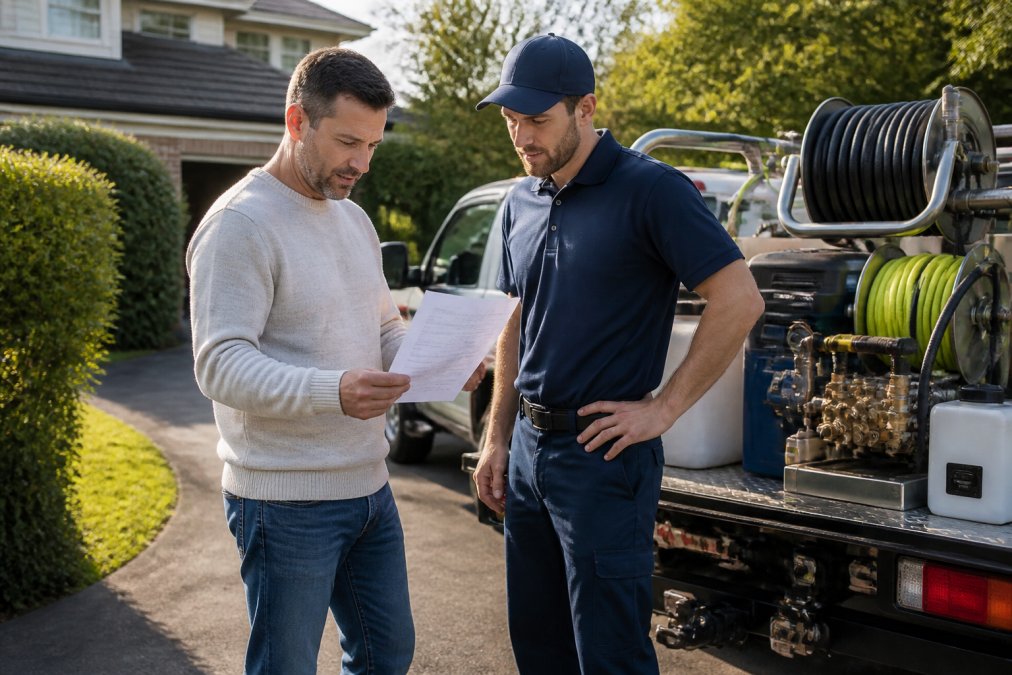
Licensing, Insurance, and Safety Compliance
Licensed and insured operators aren’t just a legal formality, they’re your protection if something goes wrong. Public liability insurance covers property damage and personal injury claims that arise from the cleaning work. Without it, any damage to your property, your neighbour’s fence, or a visitor on site during the job becomes your problem to resolve.
Safety compliance is particularly relevant for commercial and strata jobs, where Safe Work Australia’s model codes of practice set expectations for risk management, working at height, and chemical handling. Residential jobs carry their own risks, particularly when operators work on roofs or elevated surfaces.
Verifying Customer Reviews and Service Reliability
Customer reviews are useful, but they need to be read critically. A high volume of five-star reviews from the past six months is more meaningful than a handful of older reviews. Look for reviews that mention specific surfaces, specific outcomes, and how the operator handled any issues that arose. Generic positive reviews ("great service, would recommend") tell you very little about service reliability.
Customer satisfaction in pressure cleaning is closely tied to whether the operator set realistic expectations upfront. Reviews that mention "better than expected results" or "explained everything clearly" are stronger signals than price-focused praise.
Why AquaBlast Elite Stands Apart as a Pressure Cleaning Company
The comparison between Aaron’s Pressure Washing vs Pete’s often ends with homeowners choosing based on price or proximity. That’s understandable, but it leaves the most important variables unexamined.
AquaBlast Elite approaches every job with cutting-edge high-pressure cleaning equipment calibrated to the specific surface, not a single setting applied across the board. Customised solutions for every project mean that a timber deck, a commercial car park, and a tiled roof each receive the method and chemical treatment appropriate to that surface. The team’s years of experience across residential, commercial, and industrial cleaning means surface-specific risk is understood before the work begins, not discovered mid-job.
Servicing all of Sydney and surrounding areas, AquaBlast Elite’s skilled professionals deliver results that restore and rejuvenate surfaces to a standard that holds up over time, not just on the day of the clean. For property managers, real estate agents, and homeowners who need reliable exterior maintenance, that consistency is what makes the difference between a one-off result and a long-term solution.
Exterior cleaning decisions are often made under time pressure, a property listing, a strata inspection, or a building that’s overdue for maintenance. The risk of choosing the wrong operator is real: damaged surfaces, poor results, and no recourse if something goes wrong. AquaBlast Elite offers customised high-pressure cleaning solutions backed by cutting-edge equipment, surface-specific expertise, and a commitment to results that consistently exceed expectations. Book a call with AquaBlast Elite and get a site assessment before you commit to any provider.
Frequently Asked Questions
Q: What is the difference between soft washing and high-pressure cleaning?
A: High-pressure cleaning uses water forced through a nozzle at high PSI to physically remove dirt, mould, and debris from hard surfaces like concrete and brick. Soft washing uses lower water pressure combined with biodegradable cleaning solutions to treat surfaces such as roof tiles, timber decks, and painted weatherboards that could be damaged by full pressure. Choosing the wrong method can strip paint, crack tiles, or drive water behind cladding, so a qualified provider will assess each surface before selecting the technique.
Q: How do I verify the reputation of local pressure cleaning contractors?
A: Start by checking Google reviews and any profiles on platforms like hipages or ServiceSeeking for consistent, detailed feedback over time. Ask the company directly for before-and-after photos from comparable jobs and request references from clients with similar property types. Confirm the business holds current public liability insurance and, where relevant, a contractor licence issued under the relevant state authority. A provider unwilling to share this information is a clear warning sign regardless of how competitive their quote appears.
Q: What factors influence the cost of residential pressure cleaning in Sydney?
A: Pricing varies based on the total surface area to be cleaned, the type and condition of the surface, accessibility (multi-storey or confined spaces add time), and whether specialist treatments such as mould removal or roof rejuvenation are required. Travel distance within the service area, the cleaning method chosen (soft wash versus high pressure), and whether a maintenance plan is included all affect the final figure. For an accurate quote tailored to your property, contact AquaBlast Elite directly rather than relying on generic estimates.
Q: Are there specific certifications or licences required for pressure cleaning businesses in Australia?
A: Requirements vary by state. In New South Wales, contractors must hold a valid contractor licence issued by NSW Fair Trading when work is connected to a residential building and exceeds the relevant threshold. All operators should carry public liability insurance and comply with Safe Work Australia's guidelines for working at height and hazardous substances. Responsible providers also follow local council requirements around wastewater containment to prevent chemical runoff from entering stormwater drains, which is regulated under the Protection of the Environment Operations Act 1997.
This article was written using GrandRanker