
Last Updated: November 18, 2026
Quick Summary
Exterior maintenance for commercial properties means inspecting the building envelope at least twice a year, clearing gutters before the wet season, and scheduling professional pressure cleaning before inspections and peak trading periods. Split your budget into planned work and a contingency for reactive repairs, and require dated photos and condition notes from contractors after each visit.
- Inspect the building envelope at least twice a year and always after severe weather.
- Clear gutters at least twice a year, quarterly where trees overhang.
- Ponding that lasts more than 48 hours after rain signals a drainage problem.
- Book pressure cleaning before inspections, before peak trading, and after graffiti incidents.
- Fund planned work from the operating budget and hold a contingency for reactive repairs.
Table of Contents
- Why Exterior Maintenance Protects Your Property’s Value
- Your Commercial Property Maintenance Checklist
- Commercial Building Exterior Maintenance: What to Inspect and When
- Commercial Roof and Gutter Maintenance That Prevents Water Damage
- Commercial Pressure Cleaning: When and How to Schedule It
- Budgeting, Vendors and Smart Monitoring: The Angles Most Managers Miss
- Book a Professional Exterior Clean Before Your Next Inspection
- Frequently Asked Questions
Why Exterior Maintenance Protects Your Property’s Value
Exterior maintenance is the planned care of a building’s outside surfaces, roof, drainage and grounds so they stay sound and presentable. A clean, well-kept exterior signals a well-run building to tenants, buyers and inspectors alike.
The link to value is simple. Grime, moss and pooled water break surfaces down. Our guide on why regular building exterior cleaning prevents damage explains how scheduled cleaning protects surfaces and value over time. Let that run for a few years and you are paying for repairs instead of cleaning.
A common mistake is treating the exterior as a cosmetic issue. It is not. Cracked sealant, blocked drains and dirty cladding all speed up wear, and the repair bill lands on you.
So what does a sensible program look like? Below, we break down the checklist, the inspection timing and the cleaning schedule that keeps a commercial property ahead of the damage.
Your Commercial Property Maintenance Checklist
A commercial property maintenance checklist is a written list of exterior tasks, each with a set frequency and a named owner. It turns vague good intentions into work that actually gets done.
Run through this list each quarter:
- Walk the perimeter and note cracks, stains and loose panels
- Check roof flashings and clear leaves from gutters
- Confirm downpipes flow freely after rain
- Inspect car park lines and surface condition
- Test exterior lights and check signage is secure
- Look for weeds in paving joints and garden beds
- Check painted and cladded surfaces for fading or damage
- Photograph anything that has changed since last time
Date every entry. A dated record is your proof that you acted, which matters if a tenant or insurer ever asks.
Commercial Building Exterior Maintenance: What to Inspect and When
Commercial building exterior maintenance starts with the building envelope, meaning the outer shell of walls, roof, windows and doors that keeps water and air out. Inspect it at least twice a year, and always after severe weather. The difference between a useful inspection and a box-ticking exercise is knowing what each component fails like, how fast the failure progresses, and what evidence to capture.
Work through the main areas in this order, and record the condition of each against the previous inspection:
- Roof and flashings, look for lifted metal, cracked sealant, ponding and perished screw washers. Ponding that persists more than 48 hours after rain points to a fall or drainage problem, not just a blocked outlet.
- Gutters and downpipes, clear debris before the wet season, then confirm downpipes discharge away from the footings rather than into the soil immediately beside them.
- Walls and cladding, check for gaps at joints, fading, chalky residue, water marks and efflorescence (the white salt staining that signals moisture moving through masonry).
- Windows and doors, confirm seals sit tight, check for condensation between panes, and test that weep holes and drainage channels in window frames are clear.
- Paving and car parks, note cracks, trip hazards, worn line marking and any subsidence that could indicate a leaking service pipe beneath.
A practical inspection cadence by component:
- Roof and flashings: twice a year, plus after any severe storm
- Gutters and downpipes: at least twice a year, quarterly where trees overhang
- Walls, cladding and sealant: twice a year, with a closer look before repainting cycles
- Windows and doors: annually, and after any reported leak
- Paving and car parks: quarterly for trip hazards, annually for surface condition
For a more detailed list of the defects worth watching for on local buildings, see our guide to common exterior building defects and what to inspect.
Small hairline cracks in cladding or render are easy to ignore, but water gets in, the substrate stays damp, and a patch job can grow into a larger repair.
Here is the inspection cadence the article recommends for each part of the building envelope.
| Component | Frequency | Note |
|---|---|---|
| Roof and flashings | Twice a year, plus after severe storms | Watch for ponding lasting over 48 hours |
| Gutters and downpipes | At least twice a year, quarterly where trees overhang | Clear debris before the wet season |
| Walls, cladding and sealant | Twice a year | Closer look before repainting cycles |
| Windows and doors | Annually, and after any reported leak | Check seals, condensation and weep holes |
| Paving and car parks | Quarterly for trip hazards, annually for surface condition | Note cracks, worn line marking, subsidence |
Commercial Roof and Gutter Maintenance That Prevents Water Damage
Commercial roof and gutter maintenance is the routine clearing and checking of roof surfaces, flashings and drainage so rainwater leaves the building quickly. It is the single most important job on the list.
Blocked gutters are the classic cause of avoidable damage. Water backs up, finds a weak point, and soon you have a ceiling stain or a damp wall.
Set a rhythm:
- Clear gutters at least twice a year, more if trees overhang
- Check roof flashing and sealant each time you clear
- Flush downpipes and confirm they discharge away from the building
- After heavy rain, look for new leaks and log them
If you only do one thing, do this. Water damage is expensive and slow to show.
Commercial Pressure Cleaning: When and How to Schedule It
Commercial pressure cleaning is scheduled professional washing of hard exterior surfaces such as concrete, paving, cladding and building facades.
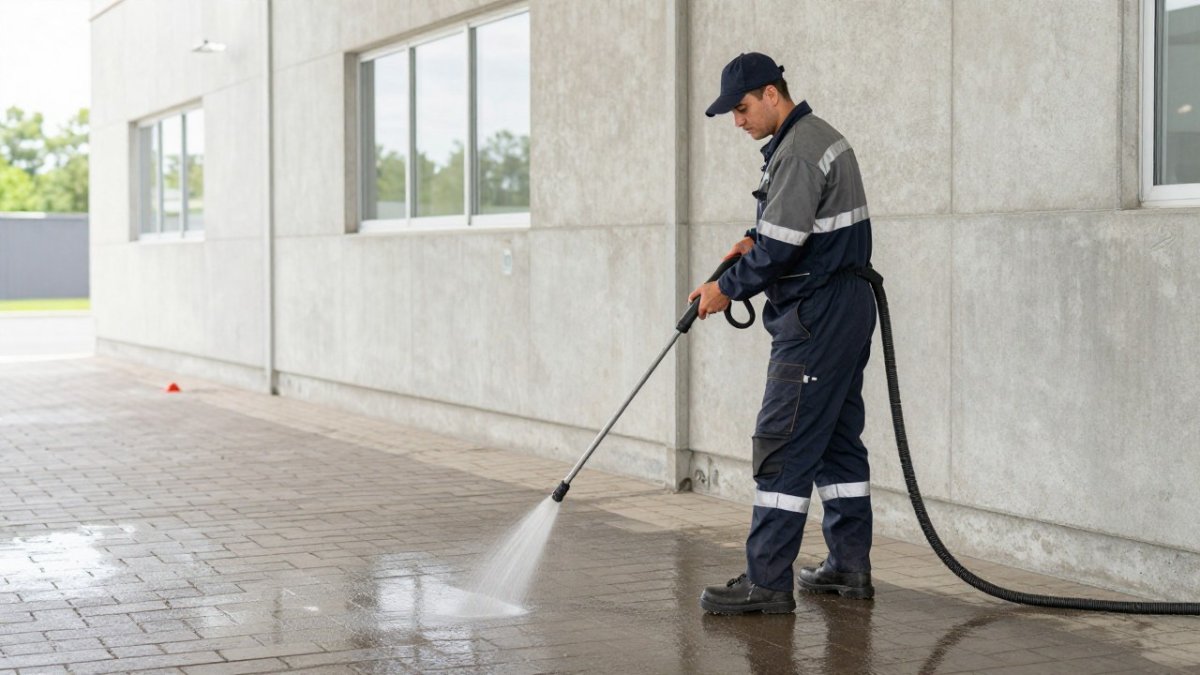
Timing matters more than frequency. Book a clean before inspections, before peak trading periods, and after any graffiti incident. Build it into your calendar so it never becomes an emergency.
Surface type decides the method. Soft washing suits delicate cladding and painted render, while high pressure is for concrete and paving. Using the wrong method on a surface can cause damage.
For help setting up a repeatable program, our guide to commercial pressure cleaning maintenance schedules walks through how to plan the year.
Budgeting, Vendors and Smart Monitoring: The Angles Most Managers Miss
Most exterior maintenance guides stop at the checklist. The operational layer, how you fund the work, how you choose who does it, and how you catch problems before they surface, is where property managers either protect the asset or pay for it twice. This section covers the three angles the generic listicles leave out.
Budgeting: separate planned work from reactive repair
Split your exterior budget into two lines. Planned work (scheduled cleaning, gutter clearing, annual inspections) is predictable and can be quoted and spread across the year. Reactive repair is not, and it is the line that blows out.
The cost-benefit case for preventative work is straightforward once you frame it as avoided cost. A blocked gutter that overflows into a wall cavity can mean internal plaster repair, repainting and possibly mould remediation; clearing the same gutter on a schedule costs a fraction of that. Capturing evidence is often the hard part, which is why dated inspection records and before-and-after photos matter. They let you show a committee or owner what the planned spend prevented.
Vendor management: a vetting checklist that actually filters
Exterior maintenance contractors vary widely in capability. Before you sign, confirm:
- Written scope stating exactly what is cleaned, how often, and to what standard, not just “pressure cleaning” but which surfaces, which method, and what is excluded
- Method matching, ask how they decide between high pressure and soft washing, and whether they will test an inconspicuous area first on delicate cladding or painted render
- Response times for graffiti removal and urgent call-outs, written into the agreement rather than promised verbally
- Insurance and safe work documentation, public liability cover, plant and equipment tickets, and safe work method statements for work at height or near traffic
- Reporting, will they give you dated photos and a condition note after each visit, so the maintenance record builds itself?
A service level agreement should tie payment to those reporting obligations, not just to attendance. If the contractor cannot tell you what they found, you have paid for a visit but gained no intelligence about the asset.
Smart monitoring: cheap sensors, big early warning
The technology angle is no longer exotic. Simple leak sensors placed in roof spaces and plant rooms, and scheduled photo records taken from the same positions each quarter, catch problems long before they show up as a ceiling stain. None of this replaces a physical inspection, but it compresses the time between a defect appearing and someone noticing it, which is where the real cost sits.
For a structured plan you can budget around, see our commercial exterior maintenance plans guide. It sets out how to schedule recurring work across the year and how to build the reporting obligations into your contractor agreements.
Book a Professional Exterior Clean Before Your Next Inspection
If an inspection or a sale is coming up, a professional clean is the fastest way to lift the building’s appearance. It also gives you a clear look at the surfaces so defects are easier to spot.
AquaBlast Elite offers high-pressure cleaning services across Sydney and its surrounds, with customised solutions for commercial, industrial and residential clients.
Ready to get the exterior looking its best? Book exterior pressure cleaning to request a quote.
Your building’s exterior takes a beating every season, and the damage rarely waits. Get ahead of it with a team that treats your property like its own. AquaBlast Elite brings high-pressure cleaning equipment, customised solutions and skilled professionals to every job, restoring surfaces so they look brand new. Get started with AquaBlast Elite and protect your property’s value before the next inspection.
Frequently Asked Questions
What exterior maintenance should commercial property managers schedule?
A workable schedule covers roof and gutter checks twice a year, monthly drainage and debris removal, quarterly building envelope and cladding inspections, seasonal landscaping and weed control, and pressure cleaning every six to twelve months depending on foot traffic and pollution. Add exterior lighting and signage checks monthly, and pavement inspections after heavy rain. Put it all in a written commercial property maintenance checklist so nothing depends on memory, and review the schedule annually against your budget and any deferred maintenance backlog.
How often should a commercial building exterior be inspected?
Walk the exterior monthly for obvious issues like cracked cladding, blocked drains, damaged signage or new graffiti, and book a detailed inspection quarterly. Roofs, flashing and gutters need a closer look at least twice a year, ideally before and after the wet season. After any severe storm, inspect immediately rather than waiting for the next scheduled date. Keep dated notes and photos of each inspection: they support insurance claims, help you track property depreciation, and give contractors a clear brief when you request quotes.
When should commercial building exteriors be pressure cleaned?
Most commercial sites need pressure cleaning every six to twelve months. Bring it forward if your entrance, car park or loading dock shows staining, mould, tyre marks or graffiti, or if an inspection or lease review is coming up. Concrete, paving and hardscaping usually handle higher pressure, while timber decks, painted cladding and older render need a gentler approach. Ask any provider how they protect nearby gardens and stormwater drains, and confirm they use methods that suit each surface rather than one setting for everything.
How can property managers prevent water damage to commercial buildings?
Water damage usually starts small: a blocked gutter, a failed roof flashing or a cracked sealant joint. Clear gutters and drainage systems before the wet season, check roof flashings and box gutters twice a year, and reseal joints as soon as they fail. Keep landscaping irrigation pointed away from the building envelope, and make sure ground levels fall away from walls. Fix leaks early rather than logging them as deferred maintenance, because one unresolved leak can turn into structural repairs and a much larger capital expenditure line.
